


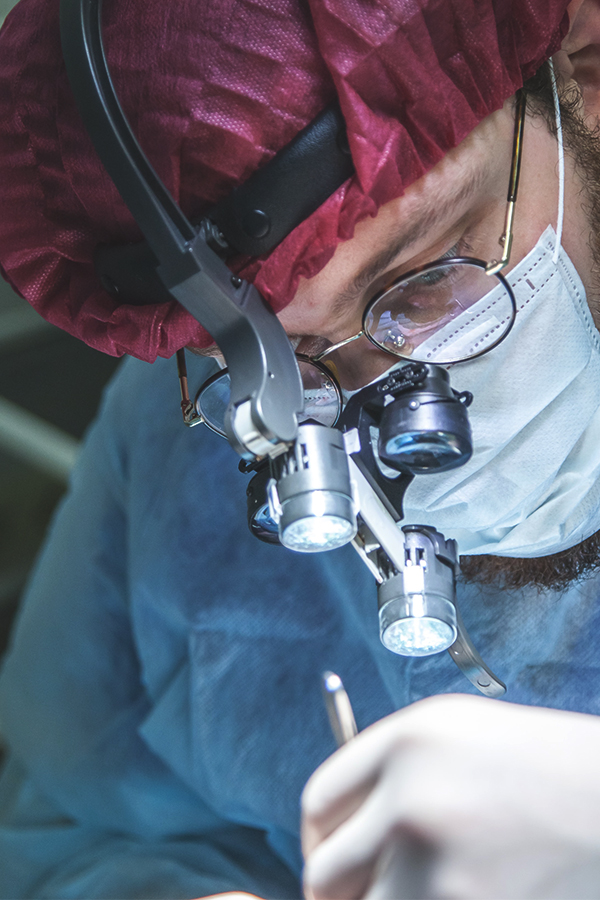
Understanding Maxillofacial Surgery
If you have a condition involving the teeth, jaws, or bones and tissues of the face that causes you pain and prevents you from performing normal activities, you may need to see a specialist in oral and maxillofacial surgery, such as the team members at MAXILLOS, to correct the abnormality, relieve the pain, and allow you to return to a normal life.
Why Visit an OMS?
While it might be common knowledge when and why to visit a general practitioner or a dentist, what prompts a patient to visit an oral and maxillofacial surgeon (OMS)?
As experts in face, mouth and jaw surgery, OMSs treat a range of conditions, including:
- Many people have their wisdom teeth removed by an OMS.
- Dental implants are placed by an OMS to replace damaged or missing teeth.
- OMSs are often involved in the treatment of facial injury and trauma
If a condition pertains to oral health or the overall wellness of the head, neck, jaw or face, it may be wise to consult an oral and maxillofacial surgeon. Patients should visit surgical professionals – not their family dentist – for these more complex procedures.
Why OMS? What Does OMS Mean?
An OMS goes through dental school and then spends an minimum of four to six additional years in a hospital-based surgical residency program. Many also become board-certified, seek further degrees or complete fellowships for a subspecialty.
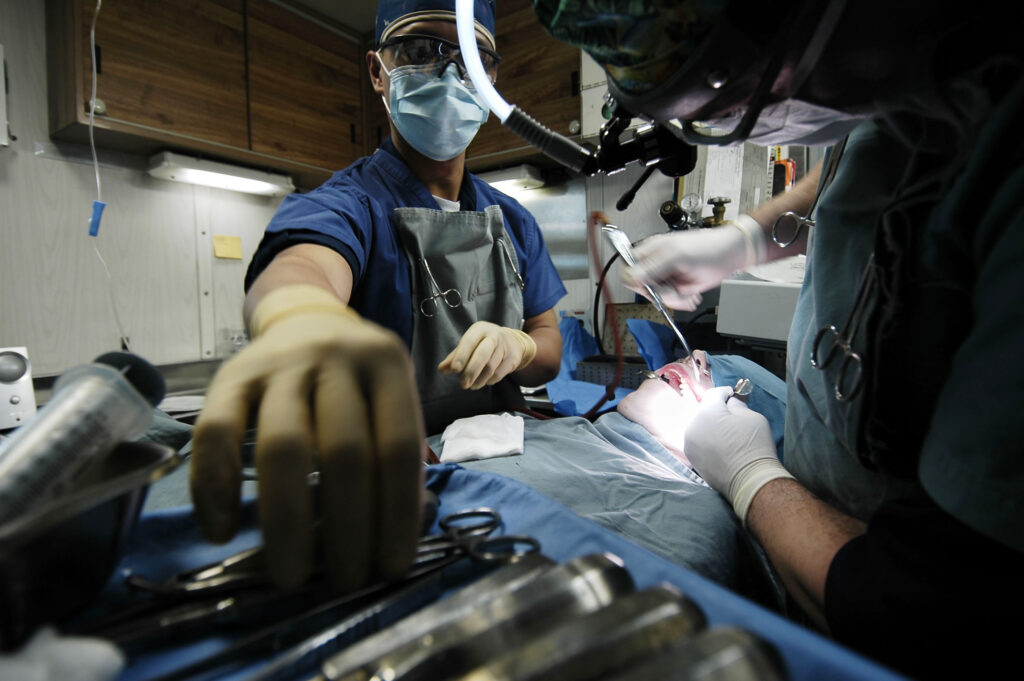
Oral Surgeon vs. OMS
The phrase “oral surgeon” may be a familiar one, but the full name of this specialist is oral and maxillofacial surgeon (OMS). While dentists can perform minor oral surgeries, they are not oral surgeons (or oral and maxillofacial surgeons).
Following dental school, an OMS completes a minimum of four to six additional years of surgical training in a hospital-based residency program. This makes an OMS the true surgical specialist of the dental field, able to perform advanced surgeries that can encompass the entire maxillofacial region.
What Is Maxillofacial Surgery?
You can probably tell by the name that maxillofacial surgery has something to do with the face and front part of the head. “Maxillo” is a Latin word root that means “jawbone.” Therefore, the term “maxillofacial” refers to the jawbones and the face, and maxillofacial surgery is a field of medicine specializing in treating conditions in this area through surgical procedures.
A maxillofacial surgeon is a dental specialist with advanced medical knowledge responsible for the study, diagnosis, medical / surgical treatment of diseases, injuries and defects that involve the functional and aesthetic aspect of the hard and soft tissues of the oral cavity, bone structures -dental, craniofacial region and the rest of cervical structures related to the maxillofacial region
When Do You Need Maxillofacial Surgery?
Maxillofacial surgery is a more advanced form of oral surgery. A maxillofacial surgeon can do everything an oral surgeon can do, and much more besides. An oral and maxillofacial surgeon During their residency program, OMSs train alongside medical residents in internal medicine, general surgery and anesthesiology. They spend time in otolaryngology (ear, nose and throat), plastic surgery, emergency medicine and other specialty areas. Some oral and maxillofacial surgeons even earn an additional graduate or medical degree.
While an oral surgeon is unable to perform the most advanced oral surgical procedures, there are no limitations on the types of dental surgery that a maxillofacial surgeon can perform. This means that they can perform tooth extractions, dental implants, gum surgery, and more.
The result of such extensive training is a surgeon who is prepared to:
- Manage diseases of the teeth and their surrounding tissues.
- Extract infected, impacted or diseased teeth.
- Place dental implants.
- Perform corrective jaw surgery to reconstruct inadequate structures.
- Treat facial trauma, including lacerations and other facial injuries.
- Diagnose and surgically treat cancers of the head, neck and mouth.
- Perform cleft lip / palate surgery.
- Serve as a member of the sleep team to help treat obstructive sleep apnea.
- Treat TMJ disorders and facial pain.
- Perform facial cosmetic procedures
Get the Care You Need
At MAXILLOS can assess your situation and recommend the proper treatment options.